

 Problem C. 1900. (April 2026)
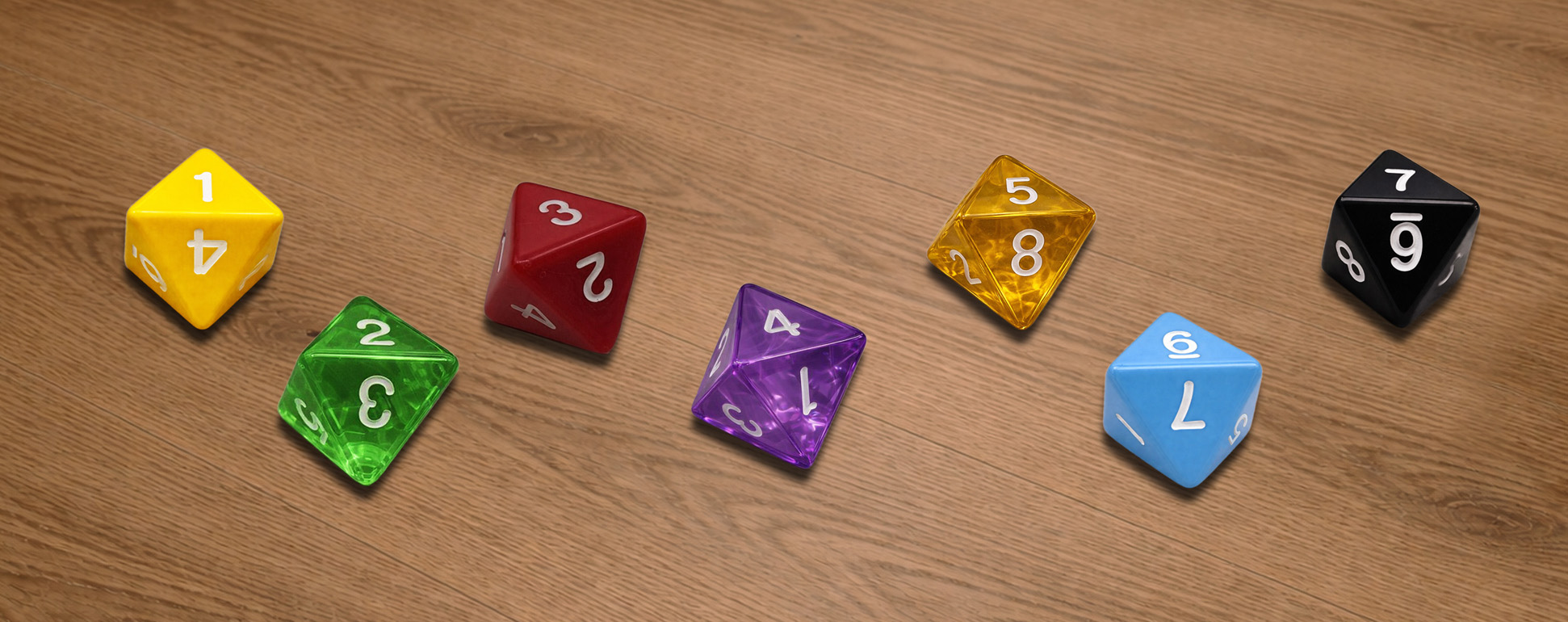
C. 1900. In a mathematics class of 30 students they play the following game. The teacher rolls seven octahedral dice of different colors, and the students write down the seven resulting numbers in an order of their choice, thus creating a seven-digit number. This time the resulting numbers were 1, 2, 3, 4, 5, 6, 7. Is it possible that one of the numbers created by the students is a multiple of another number? (Remark. The winner of the game is the student the minimum difference of whose number from the other numbers is the largest.)
Proposed by Zoltán Paulovics, Budapest
(5 pont)
Deadline expired on May 11, 2026.
Sorry, the solution is available only in Hungarian. Google translation
Megoldás. Tegyük fel, hogy léteznek \(\displaystyle X\) és \(\displaystyle Y\) olyan hétjegyű pozitív egészek, amelyek számjegyei valamilyen sorrendben az \(\displaystyle 1, 2, 3, 4, 5, 6, 7\), továbbá létezik \(\displaystyle n\) pozitív egész, hogy \(\displaystyle X=nY\). Mivel mindkét szám számjegyösszege \(\displaystyle 28\), azaz a \(\displaystyle 9\)-cel vett osztási maradéka \(\displaystyle 1\), ezért felírhatók az alábbiak szerint: \(\displaystyle X=9a+1, Y=9b+1\) (ahol \(\displaystyle a, b\) pozitív egészek). Azaz \(\displaystyle 9a+1=n(9b+1)\), ami átalakítás után:
\(\displaystyle 9(a-nb)=n-1\)
alakra hozható, azaz \(\displaystyle n\) \(\displaystyle 9\)-cel vett osztási maradéka \(\displaystyle 1\).
Ha \(\displaystyle n=1\), úgy \(\displaystyle X=Y\), tehát a két szám megegyezik. Ekkor persze teljesül, hogy az egyik a másik többszöröse.
Ha \(\displaystyle n \geq 10\), akkor \(\displaystyle X\) és \(\displaystyle Y\) nem lehetnek egyszerre hétjegyű számok.
Tehát pontosan akkor lesz az egyik szám a másik szám többszöröse, ha megegyeznek.
Statistics:
113 students sent a solution. 5 points: 90 students. 4 points: 15 students. 3 points: 2 students. 2 points: 2 students. 1 point: 1 student. 0 point: 1 student.
Problems in Mathematics of KöMaL, April 2026