Fórum: "ujjgyakorlatok"
Játékszabályok Technikai információ TeX tanfolyam Elfelejtettem a jelszavam Témák
[1] [2] [3] [4] [5] [6] [7] [8] [9] [10] [11] [12] [13] [14] [15] [16] [17] [18] [19] [20] [21] [22] [23] [24] [25] [26] [27] [28] [29] [30] [31] [32] [33] [34] [35] [36] [37] [38] [39] [40] [41] [42] [43] [44] [45] [46] [47] [48] [49] [50] [51] [52] [53] [54] [55] [56] [57] [58] [59] [60] [61] [62] [63] [64] [65] [66] [67] [68] [69] [70] [71] [72] [73] [74] [75] [76] [77] [78] [79] [80] [81] [82] [83] [84] [85] [86] [87] [88] [89] [90] [91] [92] [93] [94] [95] [96] [97] [98] [99] [100]
| [723] juantheron | 2012-05-18 07:06:44 |
 Thanks friends got it.
New task::
Numerical value of cos (10).cos (30).cos (50).......cos (890)=
where all angle are in Degree
|
|
| [722] m2mm | 2012-05-17 21:16:33 |
|
We may assume that x y. Then (y+2)2=y2+4y+4>y2+3x>y2. So, if y2+3x is a square, it must be (y+1)2. Then y2+2y+1=y2+3x, so 2y+1=3x, which means that 2y  -1 (mod 3), so y1 (mod 3). Hence, y=3k+1 for some positive integer k. Since 2y+1=3x, then 6k+3=3x, 2k+1=x.
As x2+3y is a square, then (2k+1)2+3(3k+1)=4k2+4k+1+9k+3=4k2+13k+4 as well.
But (2k+2)2=4k2+8k+44k2+13k+4<4k2+16k+16=(2k+4)2, so 4k2+13k+4=(2k+2)2=4k2+8k+4, or 4k2+13k+4=(2k+3)2.
If 4k2+13k+4=4k2+8k+4, then k=0, x=y=1 (and this pair is a soultion).
If 4k2+13k+4=(2k+3)2, then 4k2+13k+4=4k2+12k+9, so k=5. Then the solution is (11,16) or (16,11).
|
| Előzmény: [717] juantheron, 2012-05-16 20:17:02 |
|
|
|
| [719] juantheron | 2012-05-17 08:49:02 |
|
Thanks Nadorp got it
task:: find positive Integer value of x and y for which x2+3y and y2+3x is an perfect square
My solution::
Let x2+3y=l2 and y2+3x=m2
Where l,m Z
Then (x2-y2)-3(x-y)=l2-m2
(x-y).(x+y-3)=(l+m).(l-m)
means either x+y-3=l+m and x-y=l-m
2x=3+2l or 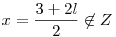
similarly 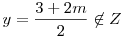
but when i put rendomly put values like (1,1) and (11,16) and (16,11)
but how can i calculate it
Thanks
|
|
|
| [717] juantheron | 2012-05-16 20:17:02 |
|
Nwe task::
The number of ordered pairs of positive integers x,y such that x2+3y and y2+3x are both perfect squares
|
|
| [716] juantheron | 2012-05-16 19:46:00 |
|
Yes Friends your answer is Right
I have solved like that way
x2=4+[x]
here R.H.S(right hand side) is an Integer that means L.H.S(Left hand side must be an Integer)
So x2Z
So Let x2=k, where k>0
So 
So our equation convert into 
Now after checking certain value of k like k=1,2,3,4,5,6
We Get only k=2 and k=6 satisfy the given equation
and after k 7, we get L.H.S # R.H.S
But Not sure about k7 has no value for which satisfy the given equation
can anyone clear last line explanation
Thanks
|
|
| [715] juantheron | 2012-05-16 19:35:38 |
|
Thanks Nadorp and Small Potato
for Integration I have solve it after yours work
I have solved it like in that way
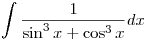
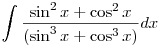


Put (cos x-sin x)=tand (sin x+cos x)dx=-dt
and 
after that we can calculate easily
|
|
|
[1] [2] [3] [4] [5] [6] [7] [8] [9] [10] [11] [12] [13] [14] [15] [16] [17] [18] [19] [20] [21] [22] [23] [24] [25] [26] [27] [28] [29] [30] [31] [32] [33] [34] [35] [36] [37] [38] [39] [40] [41] [42] [43] [44] [45] [46] [47] [48] [49] [50] [51] [52] [53] [54] [55] [56] [57] [58] [59] [60] [61] [62] [63] [64] [65] [66] [67] [68] [69] [70] [71] [72] [73] [74] [75] [76] [77] [78] [79] [80] [81] [82] [83] [84] [85] [86] [87] [88] [89] [90] [91] [92] [93] [94] [95] [96] [97] [98] [99] [100]
Játékszabályok Technikai információ TeX tanfolyam Elfelejtettem a jelszavam Témák


 6 and 3